
Explore how forgetting vital customer conversation history leads to added workload, customer hesitation, and business inefficiencies, and learn strategies to improve operational continuity.

This article clarifies the distinction between customer memory and CRM systems, showing how both play unique roles in managing customer relationships and ensuring seamless ongoing service.

This article explains the gap between having customer data in CRMs and maintaining usable customer context, highlighting its impact on business memory and employee efficiency.

Managing multiple customer conversations is more than multitasking. Learn why attention, ownership, context, and response timing determine whether customer interactions strengthen relationships or quietly create missed opportunities and operational friction.

Customers expect different things from texting and phone calls. Learn when each communication channel works best, how poor channel selection creates operational friction, and practical ways small businesses can improve customer interactions while saving time.

Fast responses alone don't guarantee more customers. Learn how response timing affects conversions, customer trust, and team efficiency, and discover practical ways to improve communication as your business grows without creating operational chaos.

Slow response times rarely appear on financial reports, yet they quietly reduce conversions, customer trust, and long-term growth. Learn why delayed replies happen, how they affect customer behavior, and the practical operational improvements that help businesses stay responsive as they scale.

Missed leads often result from fragmented communication rather than lack of effort. Learn a practical Capture, Track, Act framework that helps small businesses organize inquiries, assign ownership, improve follow-up, and convert more prospects without adding unnecessary complexity.

As customer conversations increase, many businesses struggle to maintain consistency and accountability. This guide explores how small teams can transition from solo communication to a coordinated team-based approach by improving awareness, ownership, and continuity across customer interactions.

Customers naturally switch between phone calls, email, and text depending on their needs. Learn how relying on a single communication channel creates hidden operational friction, lost opportunities, and customer disengagement for small businesses.

Tracking customer interactions is about more than storing names and dates. This article explores why connected customer histories outperform spreadsheets, how small gaps in context create operational friction, and why relationship timelines help teams make better decisions.

As customer conversations increase, communication challenges shift from simple responsiveness to visibility, ownership, and follow-through. Learn how growing businesses handle 50+ daily interactions without losing momentum, context, or customer trust.

Growing businesses often struggle with customer communication not because they lack responsiveness, but because they use the wrong channel for the situation. This article explores when SMS, phone calls, and email actually work best, how communication mismatch creates operational drag, and why coordinated visibility matters as teams scale.

As businesses grow, communication complexity increases. This article explains how lack of structure leads to missed messages, duplicated responses, and silent revenue loss—and why systems become essential.

As message volume grows, texting alone stops working. This article breaks down why conversations fragment, how revenue quietly leaks, and the system required to keep communication structured, visible, and scalable.

Customer conversations usually break down in small handoff gaps, unclear ownership, and scattered tools. This article explains why it happens and how to fix it with structure.

Customer communication often breaks down as more people get involved. This article explains how to structure conversations across a team so context stays intact, ownership is clear, and nothing slips through.

Most businesses do not lose leads because nobody replied. They lose them because conversations break across texts, calls, follow-ups, and handoffs. This article explains how customer conversation management actually works and why continuity, visibility, and ownership matter more than isolated channel activity.

Missed calls and unanswered texts rarely feel urgent, but they quietly drain revenue over time. This article breaks down how communication gaps reduce conversions, why customers don’t wait anymore, and what actually prevents those missed moments from turning into lost business.

Many small businesses respond quickly to customers but still lose context when messages, calls, and follow-ups live in different places. This article explains why communication visibility — seeing the full conversation across channels — is essential for maintaining trust, reducing missed follow-ups, and scaling customer interactions as teams grow.
Omnichannel communication doesn’t have to be complicated. This guide explains how connecting SMS and voice conversations creates continuity, improves customer trust, and simplifies communication for growing businesses.

Customer communication standards have quietly shifted. In 2026, acknowledgment, continuity across text and voice, and clear next steps are no longer exceptional — they’re expected. This article explains what modern customers consider baseline and how growing businesses can keep up.
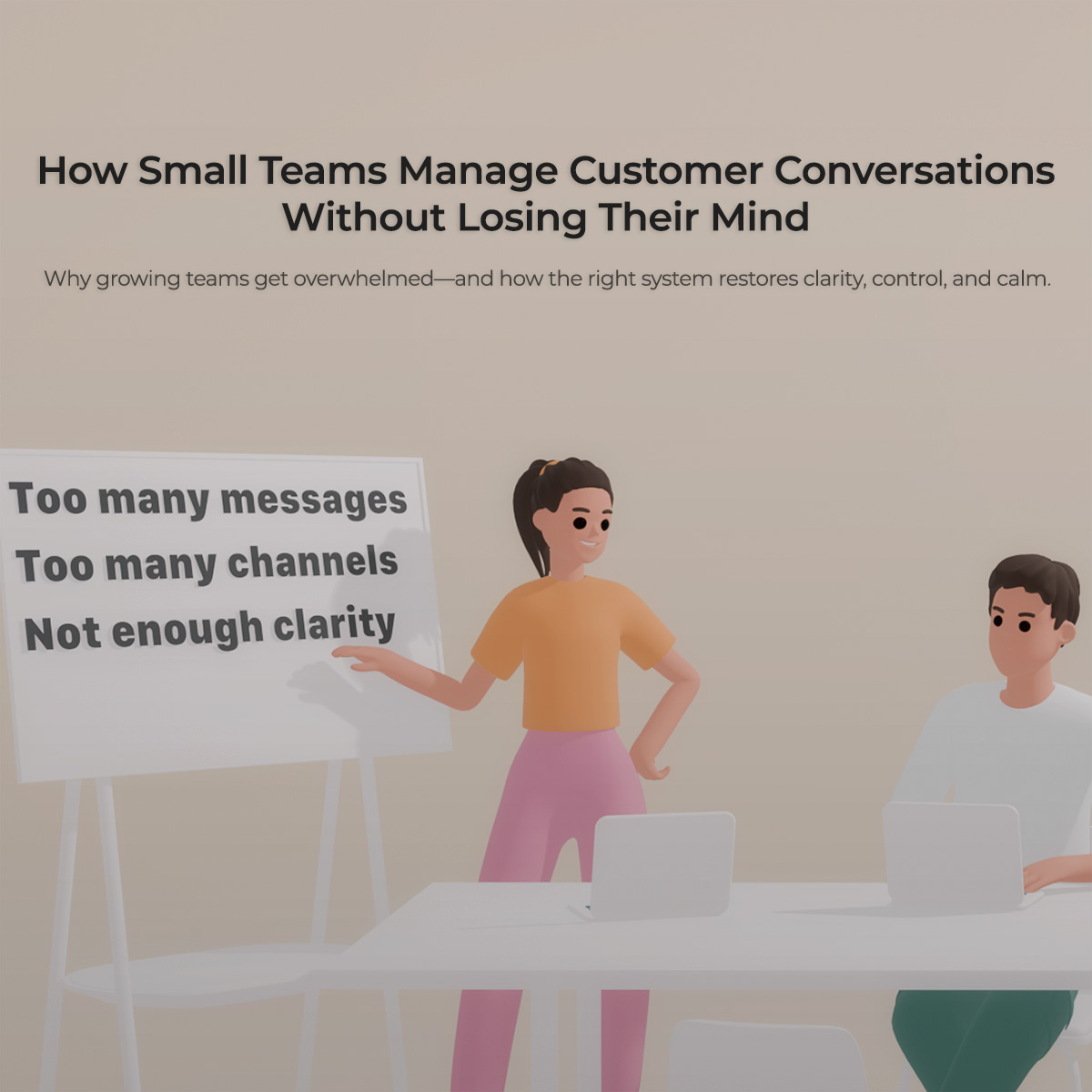
Small teams struggle with scattered texts, emails, and calls. This guide explains how to centralize conversations, reduce overload, and deliver fast, consistent customer responses in 2026.

Customer expectations have changed. This guide explains why one-channel communication no longer works, how multichannel strategies improve responsiveness, and how small businesses can meet customers where they already are in 2026.

Silence isn’t neutral in business communication. This article explains what happens when customers don’t hear back, why acknowledgment matters more than speed, and how businesses can prevent trust loss without adding staff or chaos.

Texting and phone calls are not interchangeable. This guide explains when business texting works best, when phone calls are more effective, and how using both intentionally improves responsiveness, customer experience, and communication workflows.
Small businesses often lose customers not because of price or service, but because messages go unanswered. This article explains why missed texts and calls hurt conversions and how automated SMS, templates, and cloud VoIP help businesses respond faster without adding staff.
Explore the pros and cons of texting versus calling in business communication. This article breaks down when to use each method, how to combine them for maximum impact, and tools that help streamline communication. Learn to boost engagement, efficiency, and customer satisfaction using a unified strategy with SMS and voice integration.
Learn how tone indicators can enhance business texting by preventing miscommunication and adding clarity to your brand's voice. This guide explores common tone tags, their origins, and best practices to maintain professionalism in SMS-based customer interactions.
A comprehensive guide to mastering business text messaging etiquette. Covers essential do's and don'ts, best practices, and professional communication tips. Includes insights on responding promptly, using professional language, confirming receipt of messages, and avoiding common texting mistakes. Also highlights the future of business messaging with RCS and how Text My Main Number can streamline your communication.
Text abbreviations like 'LOL' and 'BRB' save time and create a relatable tone in SMS marketing. Discover how businesses can leverage abbreviations to enhance customer engagement and improve communication strategies.
Being considerate and responsive towards your customers is crucial in today's digital age, where fast and meaningful communication sets businesses apart. Expressing gratitude and appreciation to clients is essential to building strong, loyal relationships.


