
Understanding the Real Cost of Slow Replies in Small Business Growth
As smaller companies transition from solo operations to growing teams, a subtle tension often develops around the need to respond quickly to incoming inquiries. A delay of minutes—or even an hour—may seem inconsequential at first, yet these small setbacks accumulate, quietly eroding both operational efficiency and customer willingness to move forward. Picture a local design studio that has just started to receive a steady stream of project inquiries. Early one morning, Emily, the receptionist, answers a call from a potential client interested in a branding package. She takes notes, planning to pass the message to Mark, the lead designer, who is in the middle of preparing client presentations. But as the day progresses, Emily faces an increasing flood of emails, texts, and phone calls—all demanding her attention. Overwhelmed, she prioritizes urgent requests from existing clients, pushing the new inquiry down the queue.
By afternoon, Mark spots the client’s email but assumes Emily has already responded or arranged a follow-up call. Meanwhile, the potential client receives an automated reply assuring them they will hear back “within one or two days.” Unsure if their inquiry has truly been noticed, the client hesitates, starting to explore other design firms that responded faster. This situation isn’t rare. It exposes how everyday operational pressures cause initial customer touchpoints to slow, eroding momentum in quiet but impactful ways.
Business owners often notice this pattern but misattribute it to external factors like market shifts or pricing issues. The reality is that slow responses chip away at the initial spark of customer interest, stretching sales cycles and making outcomes less predictable. As small businesses shift from informal communication to structured team management, this challenge grows more pronounced. The cost rarely appears in traditional financial reports—not a direct loss but a quiet drain on opportunity created by hesitation, doubt, and friction within daily operations.

As businesses grow, these hidden inefficiencies often become more visible when teams begin coordinating customer communication instead of managing it alone through individual habits, as discussed in How to Transition from Solo Operator to Team-Based Communication.
How Customer Behavior Changes Expectations Around Response Speed
Today’s customers expect prompt engagement. Their personal experience with digital tools sets a baseline where instant feedback is normal. Any delay—even a modest one—can unintentionally convey that their inquiry isn’t valued. For a busy creative agency, the gap between the moment a customer reaches out and a meaningful response arrives sends a powerful message about attentiveness and commitment. When that gap widens, customers shift from feeling prioritized to feeling overlooked.
Yet this shift often happens quietly, without direct complaints. Customers seldom say, “I’m discouraged by an hour’s delay,” but their actions reveal the impact. They pause, reconsider, or start quietly looking elsewhere. A wellness coaching practice noticed this firsthand. Despite increasing message volume via text and social media, new client sign-ups slowed down. Follow-up interviews with lost prospects revealed the hesitation stemmed from doubts about how responsive and reliable the practice really was.
This isn’t about impatience. It’s about assessing risk. Customers think, “If this simple question takes so long to answer now, how responsive will the service be later?” That expectation reflects the broader communication standards customers now bring to every interaction, a theme explored in What Customers Expect When Contacting a Business — Modern Communication Standards. Silence or delayed replies send a subtle but clear message about priority. Behind the scenes, customers gauge how worth their effort this interaction will be—a threshold that shrinks with each moment of silence. As a result, momentum in the sales process slips away without obvious signs.
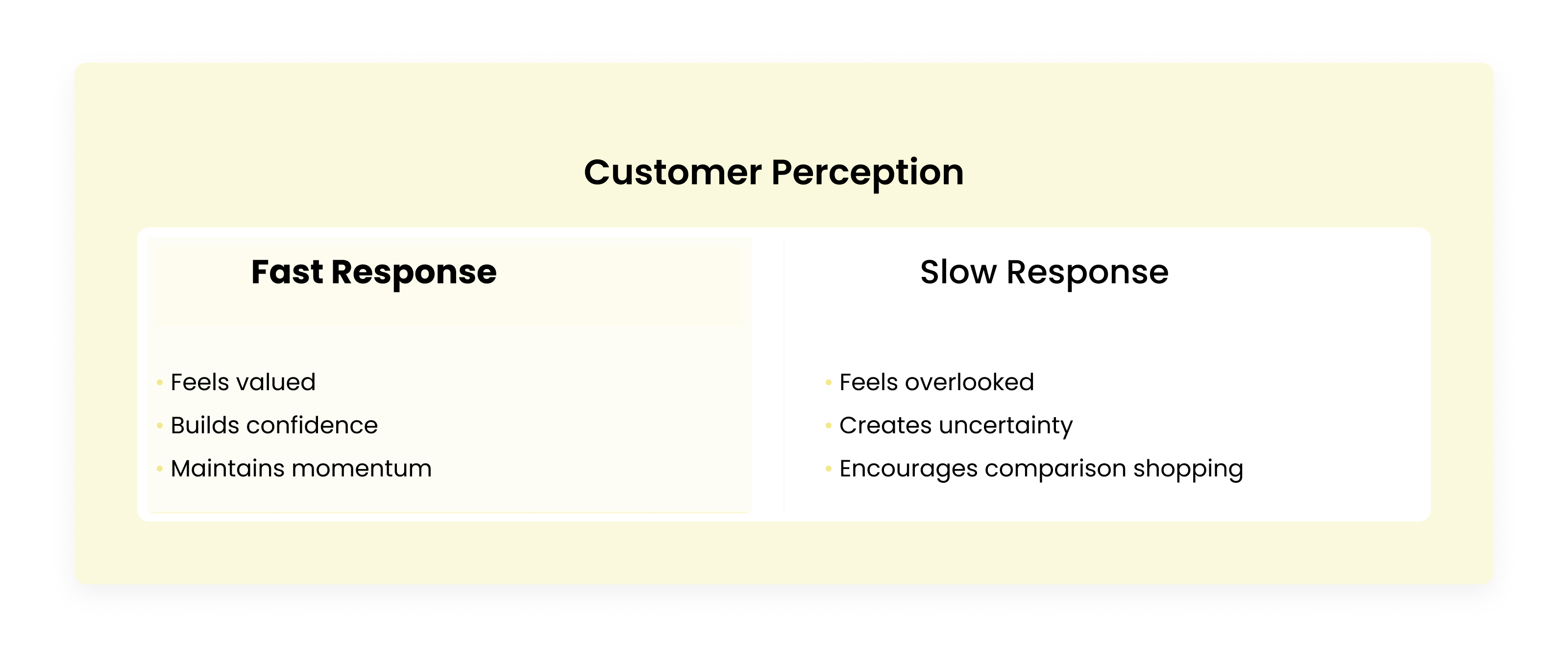
This dynamic explains why even seemingly small delays can deflate sales funnels quietly. It’s not just whether a business responds, but how quickly and how relevantly. A sincere reply after hours feels less immediate, raising chances the customer steps back right when they were close to a decision. This subtle layer of customer psychology makes rapid responses a real competitive edge, especially for small and medium businesses aiming for steady growth.
Diagnosing Operational Bottlenecks That Delay Responses
As incoming inquiries grow in number and variety, operational bottlenecks increasingly affect response times. These bottlenecks don’t appear as dramatic breakdowns but as recurring friction points between people, tools, and workflows. Consider a boutique retail shop that has recently ramped up its online presence, doubling daily customer messages. The owner, Sarah, delegates answering emails and direct messages to her assistant John, who still juggles inventory management and in-store customer support.
Without clear ownership or priorities, John switches between conflicting tasks. Some messages wait for hours, like one from a local shopper asking about new arrivals with no immediate reply. Sarah assumes John is triaging messages and prioritizing correctly, but important inquiries easily get lost under competing duties.
The tipping point arrives when a loyal customer calls after submitting a product reservation through the website chat, only to find no response. Both sides end up frustrated: the customer feels ignored, and John recognizes the lack of effective workflows or tracking.
Such moments reveal common operational weaknesses often overlooked in the daily rush:
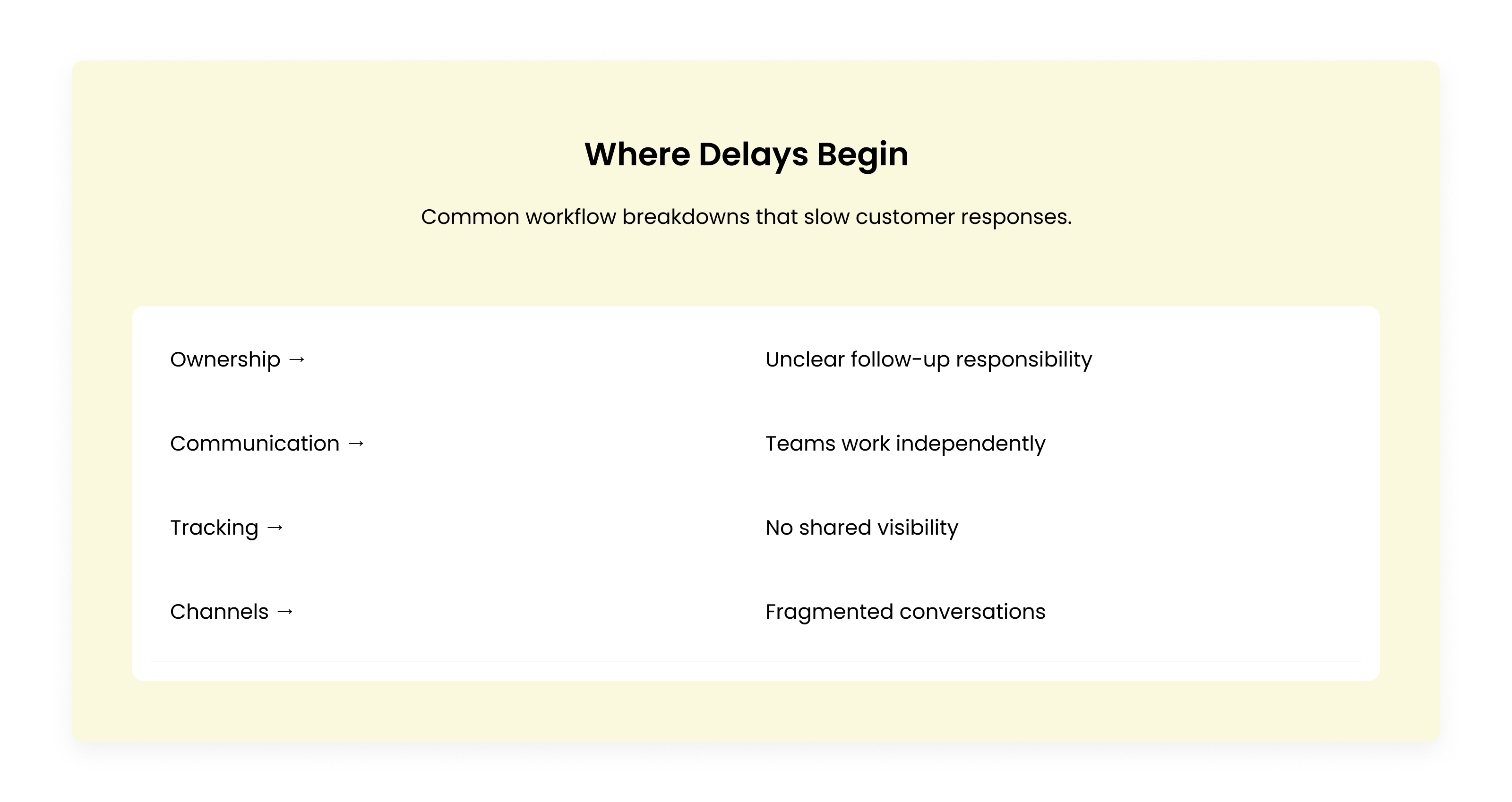
- Overlooked messages buried in cluttered inboxes or missed chat notifications
- Duplicate responses where two staff members unknowingly reply with conflicting information
- Missed follow-ups as tasks fall between in-store and online teams without a shared tracker
These failures create a pattern of inefficiency. When John answers the same question twice because he missed a colleague’s note, customer confusion grows. When a message sits unread for hours due to fragmented channels, trust erodes quietly. This daily messiness makes delays worse and breeds internal frustration, often unspoken but palpable.
This moment reveals common operational weaknesses:
- Unclear ownership for follow-up tasks
- Poor communication between online and in-store teams
- No shared system to track inquiry progress
- Multiple, fragmented channels of customer contact (email, chat, phone)
These issues delay responses and obscure where conversations stand. Many of these delays originate from messages lacking a clear destination or owner, reinforcing the operational challenges described in How to Route Customer Messages So Nothing Gets Missed. Tasks slip through cracks until dissatisfaction surfaces or interest fades. The result is damaged customer trust and missed revenue.
Leaders often underestimate the cumulative impact these slowdowns create. It’s rarely one glaring failure but an ongoing pattern of small slips that add inertia. Pinpointing exactly where delays happen—at intake, triage, or assignment—gives small businesses leverage to adjust processes and clarify roles.
Quantifying the Impact: Slow Response and Lost Opportunities
To truly grasp the cost of slow responses, consider their impact in concrete, operational terms. Take a local event planning company that receives about 30 new inquiries daily. If the first meaningful response consistently arrives one hour later than the ideal—usually within 15 minutes—the consequences become measurable through conversion rates.
Internal data and research suggest each hour of delay beyond 15 minutes reduces conversion chances by roughly 10%. Why? Because customers grow uncertain or take their business elsewhere while waiting. Applying this scenario:
- 30 inquiries each day
- One-hour delay cuts conversion by 10%
- Average project value: $2,000
- No delay: 60% convert → 18 projects/day
- With delay: 54% convert → 16.2 projects/day
- Lost opportunity: 1.8 projects × $2,000 = $3,600 lost daily
Over a month, that adds up to more than $70,000 in missed revenue—not including ripple effects like fewer repeat clients or referrals impacted by perceived responsiveness.

These numbers reveal real operational lessons. Losses don’t always show up as lost contracts but as slow erosion of sales momentum and profitability. Even minor delays can chip away at both immediate results and longer-term brand reputation.
To combat this, businesses need to measure response times carefully and compare them to what customers expect. Tracking how promptly inquiries get replies—and correlating that with conversion success—turns management attention toward meaningful improvements. This practical framework connects day-to-day communication with financial health.
Practical Adjustments to Keep Response Times Lean as You Scale
Moving from informal communication to a managed, intentional operation requires practical process changes shaped by team size and workflow realities. Small tweaks can speed responses without hiring more staff.
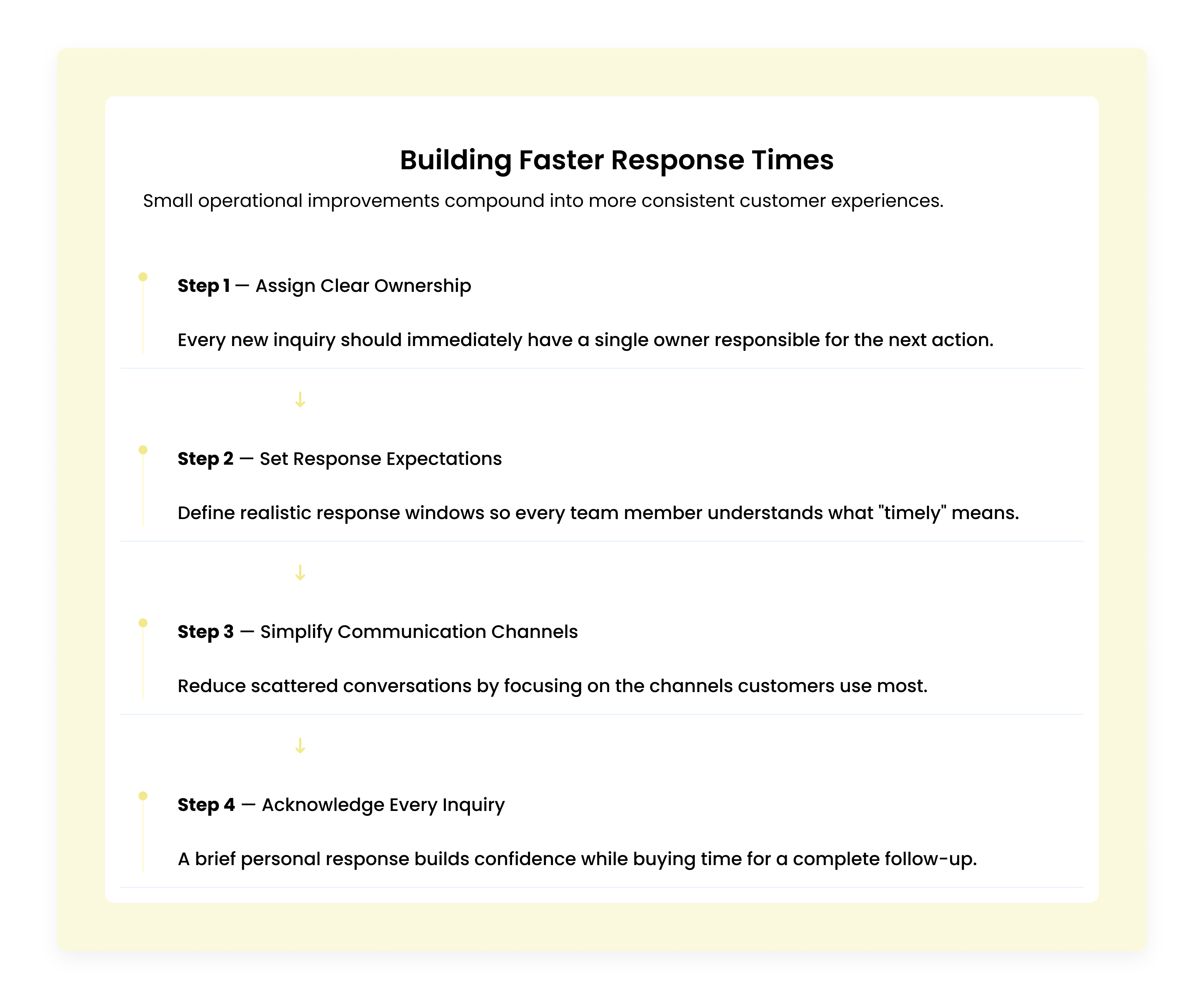
One effective step is clarifying ownership immediately when inquiries arrive. A local catering company that grew from one person to three faced rising messages by phone, email, and social media. They switched to a shared inbox system that flagged new requests and assigned them based on expertise and availability. This eliminated confusion over who should reply.
Their initial rollout wasn’t seamless. Staff sometimes resisted the new system, finding it slower than just answering calls as they came. Occasional manual errors—like requests left unassigned for hours—reminded the team that new tools need regular oversight. Over time, however, habits adjusted, and accountability improved, reducing missed replies.
Another adjustment involves setting clear expectations for response times. In a wellness coaching practice, the team agreed on a four-hour window to reply to inquiries. This gave staff structure for managing workload and reduced constant interruptions, balancing professionalism with practical limits. Still, achieving consistent follow-through required ongoing reminders—staff sometimes slipped into old habits of slower responses during busy periods, showing that culture shifts take time and persistence.
Limiting communication channels also helps streamline attention. Without controlling message sources—whether text, chat, email, or social media—businesses risk overwhelming staff. Choosing just a few main paths that customers use most and staff can handle keeps inquiries manageable and replies timely. One boutique retail owner found that shutting down one rarely used social media channel cut response lag by freeing staff from spreading focus too thin.
Finally, encouraging brief but personal early replies matters. Automated responses can soothe nerves but aren’t a substitute for genuine acknowledgment. A quick message saying, “Thanks for reaching out. I’ll review this and get back shortly,” builds trust and keeps momentum while freeing time for deeper follow-up.
These adjustments recognize the real constraints small businesses face: limited staffing, competing tasks, and multiple communication streams. Matching processes to resources and customer expectations creates sustainable responsiveness. Viewing slow replies as an operational hurdle—not individual failure—helps teams adopt steady, practical improvements instead of scrambling reactively.
Where Thoughtful Communication Systems Fit into Your Growth Journey
Communication systems built around operational needs—not quick tech fixes—offer lasting advantage. Platforms that provide shared visibility, clear accountability, and ways to prioritize inquiries mirror a thoughtful approach to managing growth.
Think about a boutique event venue operator who shifted from handling inquiries solo to delegating among a team. Instead of simply adding tools, they mapped out workflows: who reviews new requests first, who handles pricing questions, who schedules tours. This clarity stopped tasks from drifting unassigned and cut down delays.
It wasn’t just about choosing software but understanding daily realities. Initially, the team faced confusion over new processes; some messages still languished unaddressed as accountability norms took hold. Regular team check-ins surfaced bottlenecks and allowed workflow tweaks, turning the system into a living tool rather than a static solution.
The goal isn’t just automation or managing volume but aligning people and processes so messages turn into timely, meaningful responses. Creating shared visibility across conversations becomes increasingly important as inquiry volume grows, an idea expanded in Why Visibility in Customer Communication Matters for Small Businesses. That alignment lays the foundation for scaling without losing the personal touch or letting response times degrade.

This approach echoes the idea of “Spoken Touch,” balancing timely, empathetic engagement with operational capacity. It’s not about chasing fast replies alone but fostering interactions that build trust and interest. Thoughtful systems give teams frameworks to maintain this balance without burning out or creating chaos.
Implementing these systems helps businesses tackle growth challenges while embedding responsiveness as a core skill. This shifts communication from constant firefighting to steady relationship-building, enabling small businesses to stay distinctive even as they scale.
Key Takeaways
- Slow response times often manifest as subtle operational friction rather than obvious breakdowns, gradually eroding customer trust and sales momentum.
- Customers silently interpret delayed replies as signals of priority, assessing risk without explicit complaints—this behavior reshapes buying decisions more than is usually acknowledged.
- Operational clarity around ownership and channel management is crucial; unclear responsibilities foster duplicated efforts, missed follow-ups, and fragmented communication.
- Measuring the impact of delays in concrete terms reveals their true cost—minor slowdowns compound into significant lost revenue and diminished customer lifetime value.
- Thoughtful communication systems, aligned with operational realities, support sustainable responsiveness by distributing responsibility and providing teams with visibility and accountability.
Conclusion
The consequences of slow response times in small businesses extend far beyond delayed emails or missed calls. They show up in quiet shifts in customer behavior—hesitation, second thoughts, silent withdrawal—and in internal frictions like unclear ownership, misaligned workflows, and scattered task management. Though often unseen, these layered setbacks chip away at conversions and slow growth.
From an operational standpoint, the path forward involves treating response time as a quantifiable, manageable part of daily work—not as a vague issue. Whether that starts with better workflows, clearer ownership, or a 14-day free trial of a communication platform, the important step is measuring and improving response performance before small delays become larger operational problems. Identifying where delays occur and making practical changes that match team capacity and customer expectations helps maintain responsiveness and sustain trust.
Avoiding quick fixes and overload, and instead embracing thoughtful communication processes, allows teams to respond not just faster but more intentionally. This mindset supports viewing communication as a strategic asset—a reflection of brand reliability. In this way, response speed becomes a key element of managing relationships purposefully, fostering steady growth and lasting loyalty.
Small businesses, then, have a clear opportunity: to transform the challenge of scaling communication from a risk into a strength. Through measured assessment and practical steps, they can make every customer touchpoint matter—building trust, confidence, and momentum that fuel long-term success.

.svg)